Commerce is becoming
autonomous.

Structured JSON records moving through parallel lanes across a dark stone field.

Plural Worlds gives agents acting for different organizations one governed commercial record, so each side can verify authority, current terms, approvals, and final commitment.

Plural Worlds /

Independent systems will run the next economy. They need common ground.

Plural Worlds is building the commercial layer where agents acting for different organizations can negotiate, commit, and leave a record both sides can verify.

THE MISSING LAYER

Agents can talk.Agents can pay.They still have no one to answer to.

Agents can already exchange structured messages, and payment rails can move funds. Neither tells a company whether an agent was authorized, which offer is current, what information it may disclose, or what both sides finally agreed. Those commercial controls must work across company boundaries.

Before money moves between two independent systems, five questions need answers.

Plural Worlds records those answers in one shared record, so both organizations and their reviewers can verify the same facts.

How a deal works today

One commercial process is usually spread across several tools. A counterparty sends a quote by email. Pricing is compared in a spreadsheet. Legal edits a document. Approval happens in chat or an internal workflow. The signed contract is stored somewhere else.

People can reconstruct the sequence because they remember the calls, understand the documents, and know which message replaced the last one. Most of that context is not recorded in a form software can reliably use.

An agent needs one structured record of its authority, the current terms, the approvals already given, and the commitments made by both sides.

Without that record, it cannot tell what is current, what it is allowed to agree to, or which action will bind the company.

RE: RE: FWD: NDA_v7_FINAL_final.docx

Can you resend the latest quote?

Ours expired on Friday.

quotes_Q3_(2).xlsx

supplier_a41,800.00 EUR
supplier_b39,950.00 expired
supplier_cpending

#deal-desk

OM

Did legal approve this version?

Master_Service_Agreement.pdf

pages47
signatures0 of 2

procurement system

PO-2231status: unknown
approveron leave

sticky note

call their procurement before friday

Now let agents manage the work from first offer to final commitment.

Three separate JSON paper streams moving through isolated architectural channels.

Isolation

Keep every counterparty session separate.

An organization can run several sessions at the same time while each counterparty sees only its own offers, messages, and permitted outcome. The event rules determine what may be disclosed and when.

Separate sessions. One determination.

What Plural Worlds adds

One governed commercial record between the systems you already use.

Plural Worlds does not replace your ERP, sourcing, contract management, identity, or payment systems. It carries the shared commercial record between the organizations taking part.

That record shows who had authority, which terms were current, what each participant was allowed to see, and what both sides finally committed to.

Follow the record

01 to 04

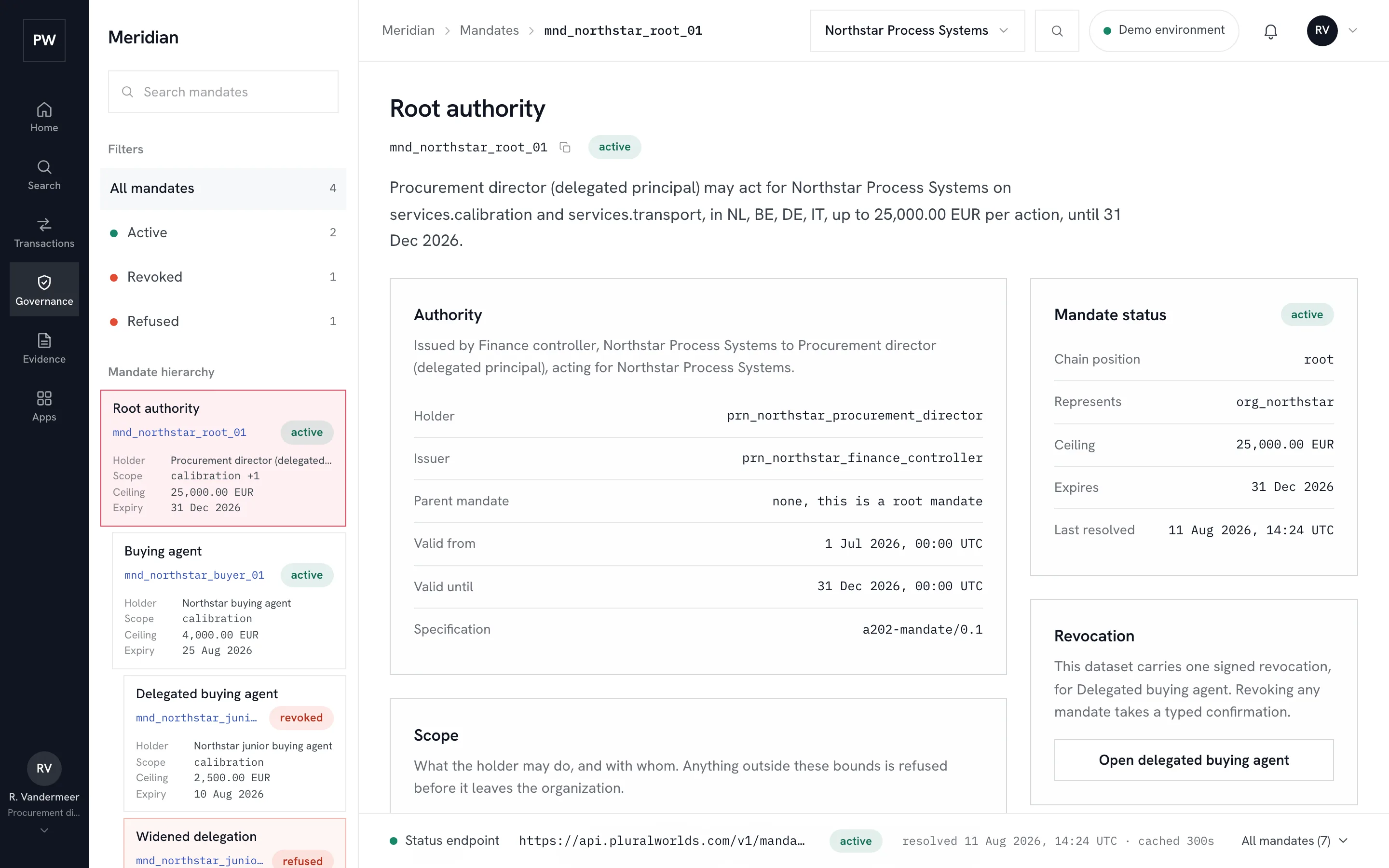
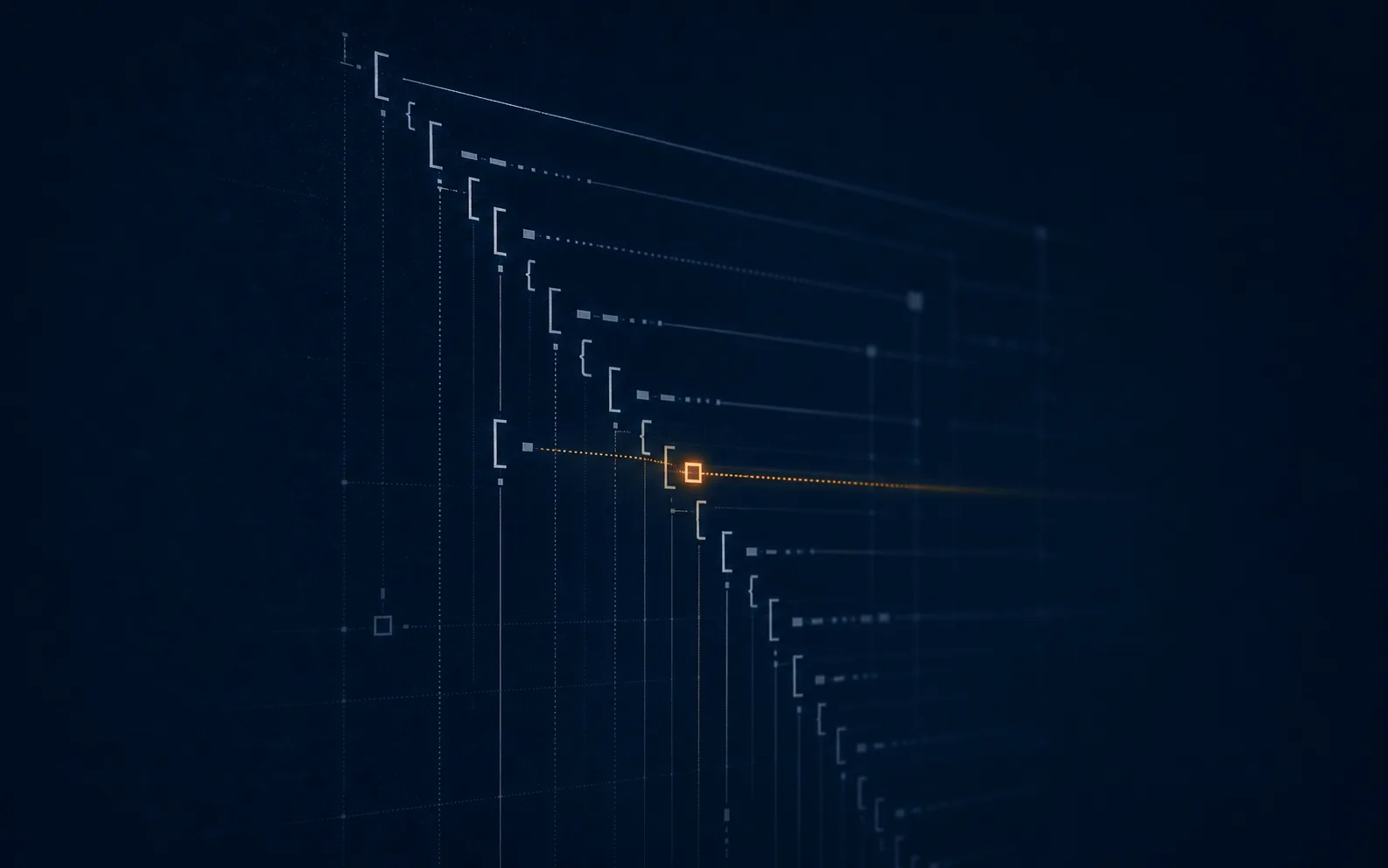
  1. Nested machine-readable authority paths converging on one orange authorization key.
    Mandate
    01

    Verify an agent's authority before it acts

    Every bid, counteroffer, approval, and commitment is checked against a mandate issued by the organization the agent represents. The mandate defines what the agent may do, the limits that apply, and whether that authority is still valid.

  2. Several machine-state objects resolving into one canonical record.
    Shared state
    02

    Keep both organizations on the same commercial state

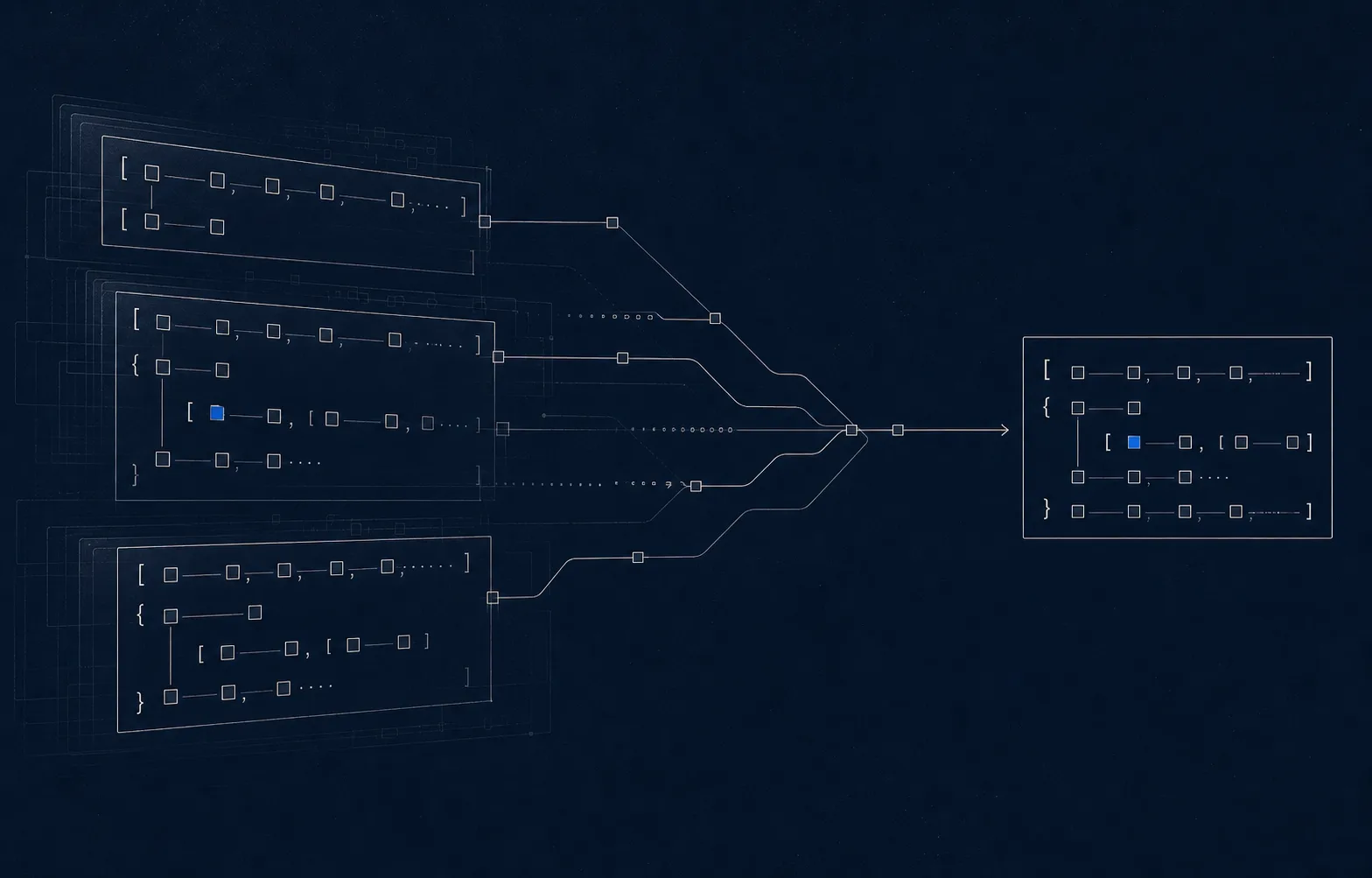
    Offers, revisions, approvals, awards, and commitments are recorded as signed events in order. Each organization can replay the shared history and determine which terms are current without depending on the other company's internal system.

  3. Parallel data streams held inside four separated machine-readable channels.
    Isolated sessions
    03

    Run competing sessions without exposing counterparty information

    An organization can negotiate with several counterparties at the same time while each counterparty sees only its own session. The rules set for the event determine when an outcome may be disclosed and which information remains private.

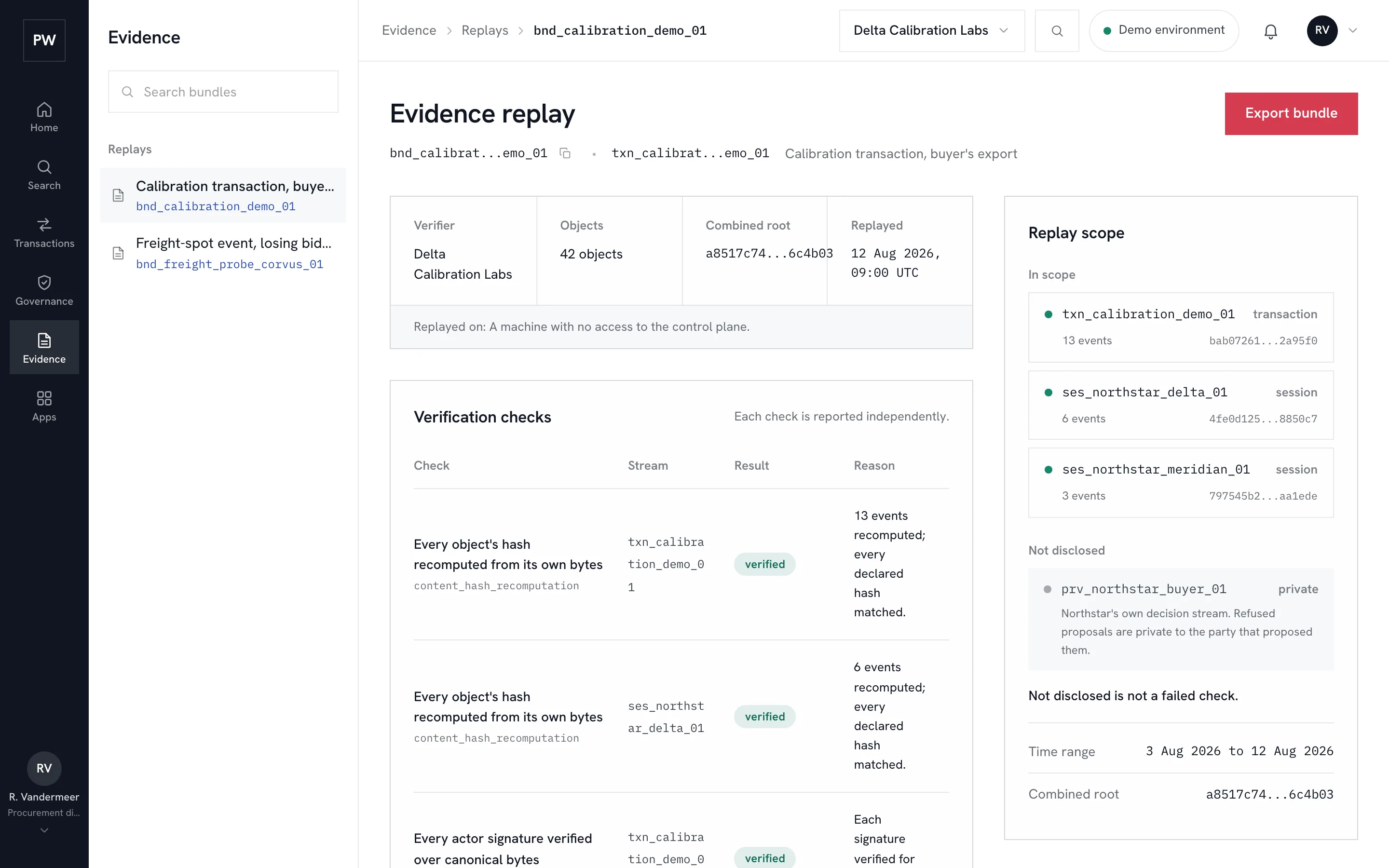
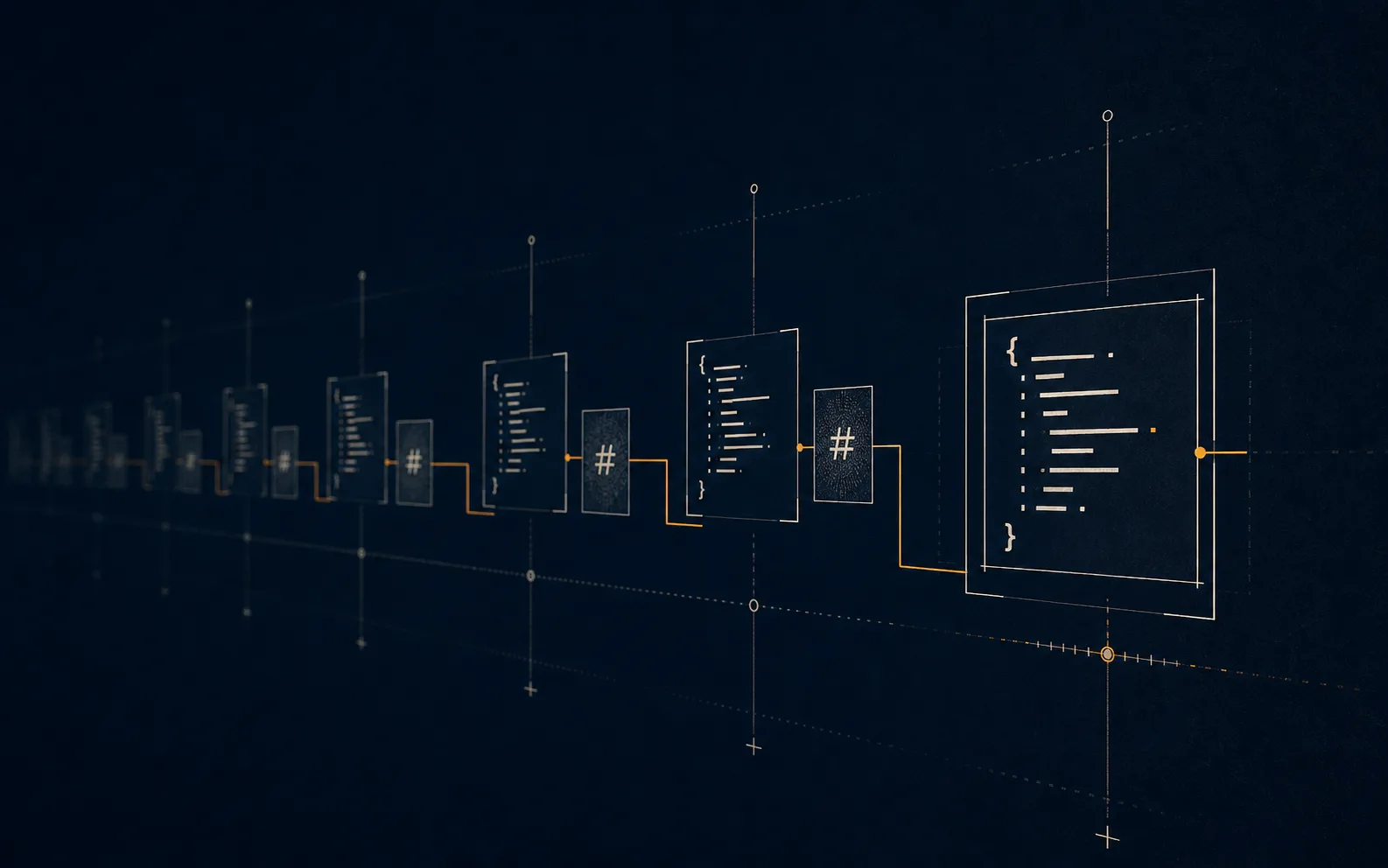
  4. An ordered trail of event objects and hashes forming an independently replayable record.
    Replay
    04

    Give internal and external reviewers a record they can verify

    The record preserves the authority checks, signed actions, applicable rules, and final commitment needed to reconstruct the activity later. A reviewer can verify what happened without relying on screenshots or the memory of the people involved.

Two structured records aligned beneath one shared commitment.

Final commitment

Both sides sign the same thing.

The deal becomes binding only when both organizations sign one canonical commitment.

How the service works / 03

Three controls inside cross-company commerce.

Plural Worlds controls how a counterparty enters, what it can see while the work is active, and what both organizations must sign before the result becomes binding. All services

CONTROL / 01

Admit one counterparty to one governed engagement

An invitation gives a counterparty access to a named engagement and nothing else. Its agent must present authority issued by its own organization before it can submit an offer or create an obligation.

Principal

Issuing authority

Mandate

Reading scope

Agent key

Matching key

Signed action

Awaiting check

Every link verified
Authority verifiedAccess limited
CONTROL / 02

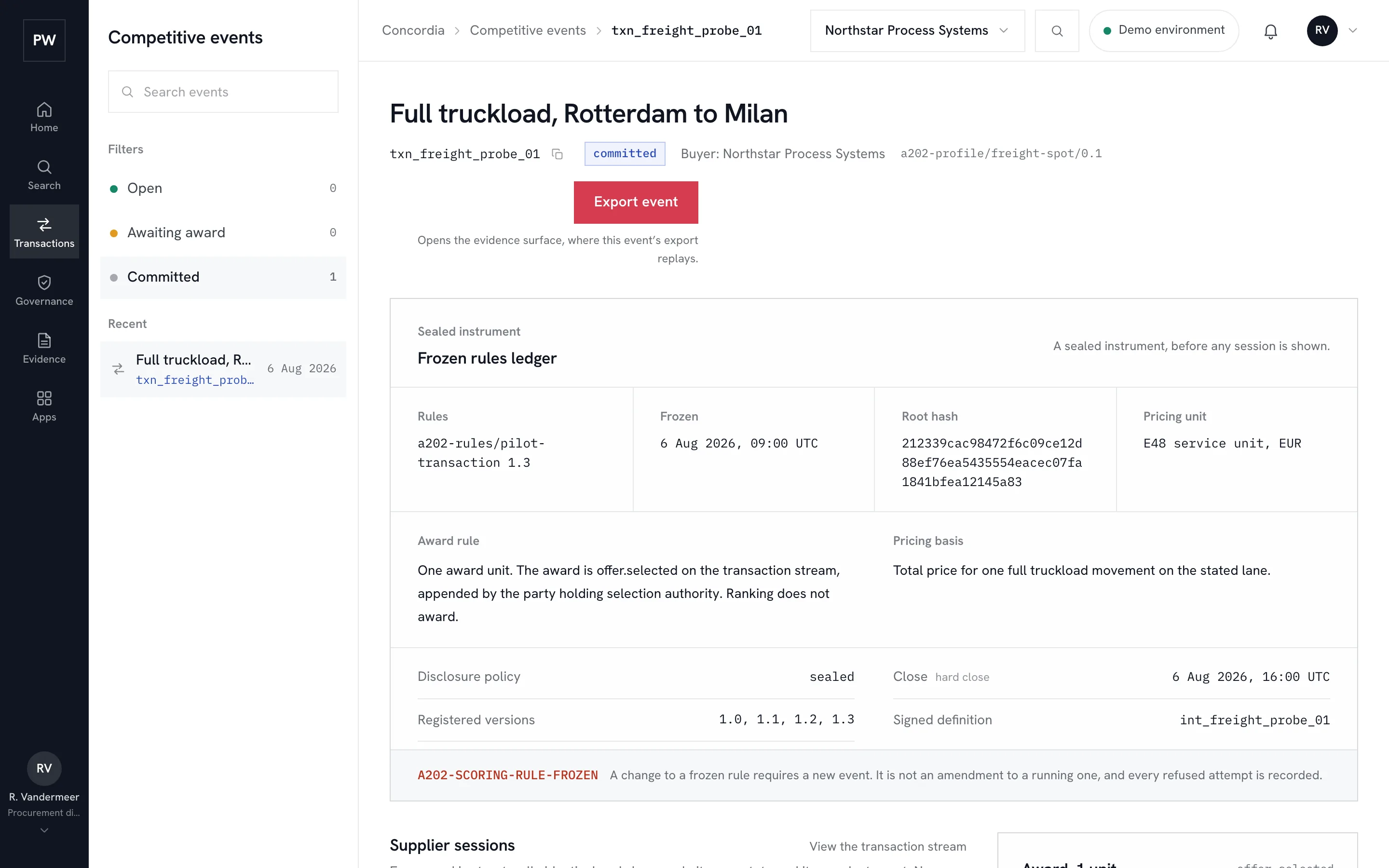
Run a sealed sourcing event without cross-bid leakage

Each supplier submits signed offers inside a separate session. The buyer fixes the event rules before bidding opens, and no supplier can observe another supplier's participation, timing, price, or errors.

Bidder APreparing
Bidder BPreparing
Bidder CPreparing
Sealed eventRules frozen
Offers received
0
Rivals visible
none
Exactly one award
Event rules fixedSessions isolated
CONTROL / 03

Create a commitment both organizations can verify

The buyer and supplier sign the same final commitment object. The record preserves the authority, offers, approvals, and terms that led to it so either side can verify the result later.

Buyer key

Preparing

Supplier key

Preparing

One canonical hash

sha-256 · rfc 8785 · 2 signatures

Audit bundleAssembling

Objects

41

Replay

consistent

Access

none needed

Both signed the same bytes
Both sides signRecord exportable

AFTER / 02

After the work ends, the signed record remains available for review.

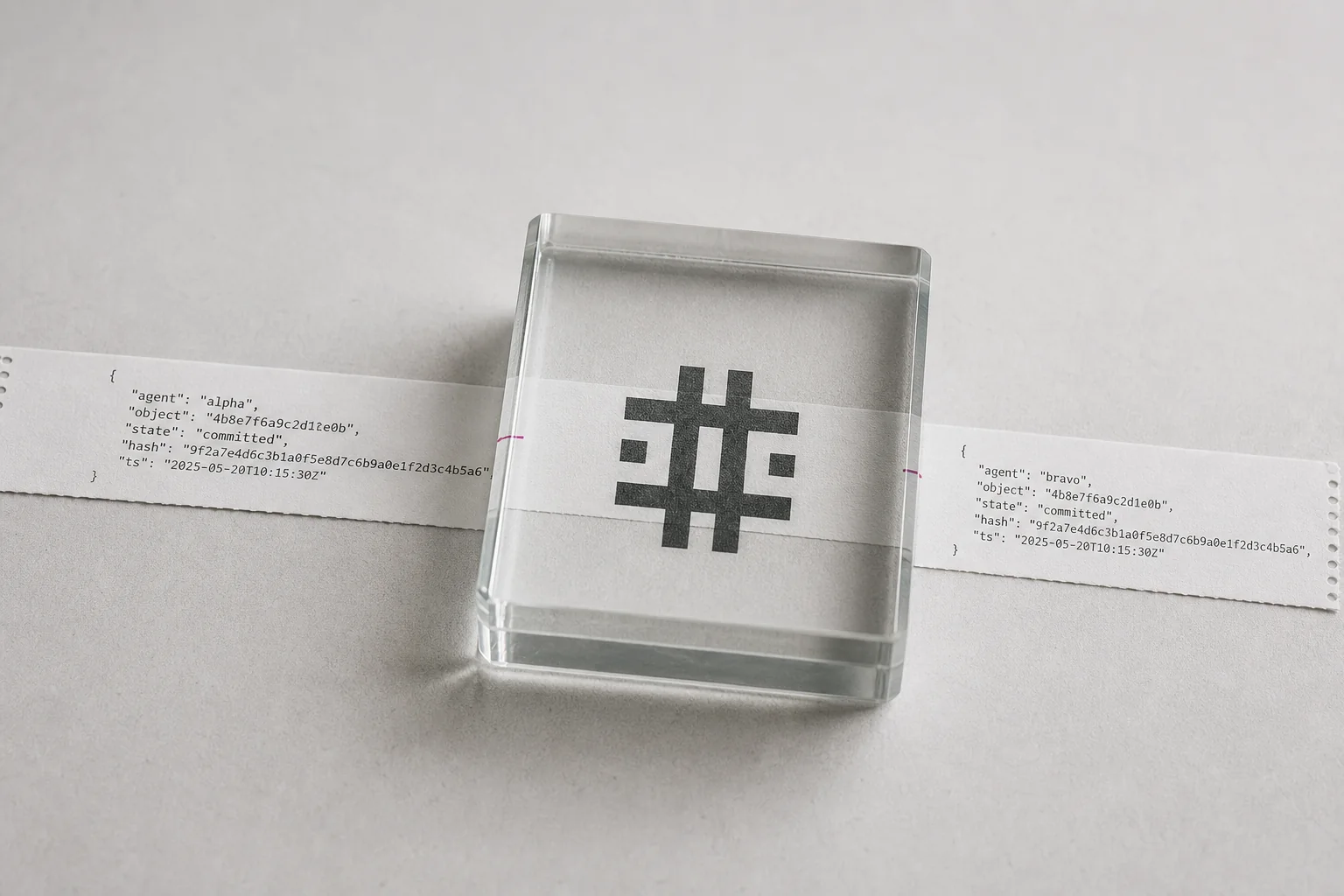
A JSON-like record impressed into pale mineral dust, ending at an orange marker.

Evidence

Reconstruct the full history from signed events.

A business team, procurement team, legal reviewer, auditor, or counterparty can trace the authority, offers, approvals, applicable rules, and final commitment from the same shared record.

Signed events. Reconstructable history.

Use cases

Where teams would use it first.

The first use cases are commercial workflows where an agent could create a real obligation and where a missing approval, leaked bid, or incomplete record would matter.

An empty meeting room where two structured records meet in one evidence case.

Delegate a first commercial task to an agent

Define which suppliers the agent may contact, which terms it may change, the financial limit it must stay within, and which decisions still require a person. Every action is checked against that mandate.

Authority
A signed record moving along a freight conveyor toward a sealed crate.

Run a multi-supplier sourcing event

Invite several suppliers under the same event rules while keeping each session separate. Suppliers see their own activity, and the buyer discloses only the outcome the rules permit.

Sealed bids
Structured records passing through aligned transparent protocol planes.

Prepare evidence for audit or dispute

Export the authority proofs, signed events, applicable rules, approvals, and final commitment. A reviewer can reconstruct what happened without relying on screenshots or employee recollection.

Evidence
A white architectural sculpture crossed by structured paper paths.

Test revocation before production

Revoke an agent's mandate and verify that its next offer, approval, or commitment is rejected immediately. The control is tested inside the live workflow, not assumed from a later access review.

Fail closed

LATER / 03

A year later, the record should still be clear to procurement, legal, and audit.

THE COMPANY

Why Plural Worlds exists.

Companies are beginning to let software agents prepare offers, negotiate terms, recommend awards, and coordinate approvals. Those actions cross the same policies, budgets, legal controls, and accountability requirements as work performed by people.

The difficult part begins when an agent acting for one company meets an agent acting for another. Neither organization should need to trust the other's internal system. Both still need to verify authority, current terms, permitted disclosure, approvals, and the final commitment.

Distinct structured paths passing through one common architectural form.
Independent systems. Shared commercial facts.

Plural Worlds is building the place where independent systems can make a deal and both know what happened.

A202 is the small open protocol used to express the shared commercial record. Read our story

Plural WorldsContact

Bring us a commercial workflow that crosses company boundaries.

We are looking for real commercial workflows where agents could negotiate or commit, but only under explicit authority, disclosure rules, and human review.

Plural Worlds2026